Genuine Principles
More copies of The Genuine Principles of the Ancient Saxon survive than any other early printing of the Declaration of Independence
The first public readings of the Declaration of Independence in Pennsylvania were scheduled for an election day, Monday, July 8. Electors were choosing representatives for a constitutional convention, set to meet in Philadelphia. The Declaration and the Pennsylvania Constitution were interconnected in multiple ways.
One of the most obvious connections can be seen in the texts themselves. The preamble of the Pennsylvania Constitution drew directly from the Declaration of Independence. It articulated that the people have the right to change their governments “and take such measures as to them may appear necessary to promote their safety and happiness.” The preamble also mentioned the tyranny of British rule, “more fully set forth in the declaration of Congress.”
Another clear connection between the Declaration and the Pennsylvania Constitution is in the list of delegates to the convention, which included a number of names also associated with the Declaration. Timothy Matlack engrossed the Declaration on parchment for the Continental Congress while simultaneously representing the city of Philadelphia in the convention and filling in as secretary for a time. Four other representatives ultimately signed that parchment copy: George Clymer, George Ross, James Smith, and Benjamin Franklin, who was chosen as president of the convention.
A less obvious connection between these two documents can be found in the published essay, The Genuine Principles of the Ancient Saxon or English Constitution. “Demophilus,” the pseudonymous author, wanted to provide some timely reading material about governance: “A Convention being soon to sit in Philadelphia; I have thought it my duty to collect some sentiments from a certain very scarce book, entitled an Historical Essay on the English Constitution, and publish them, with whatever improving observations our different circumstances may suggest, for the perusal of the gentlemen concerned in the arduous task of framing a constitution.” In short, “Demophilus” envisioned an audience that would include the men entrusted with the responsibility of crafting a new constitution for Pennsylvania.
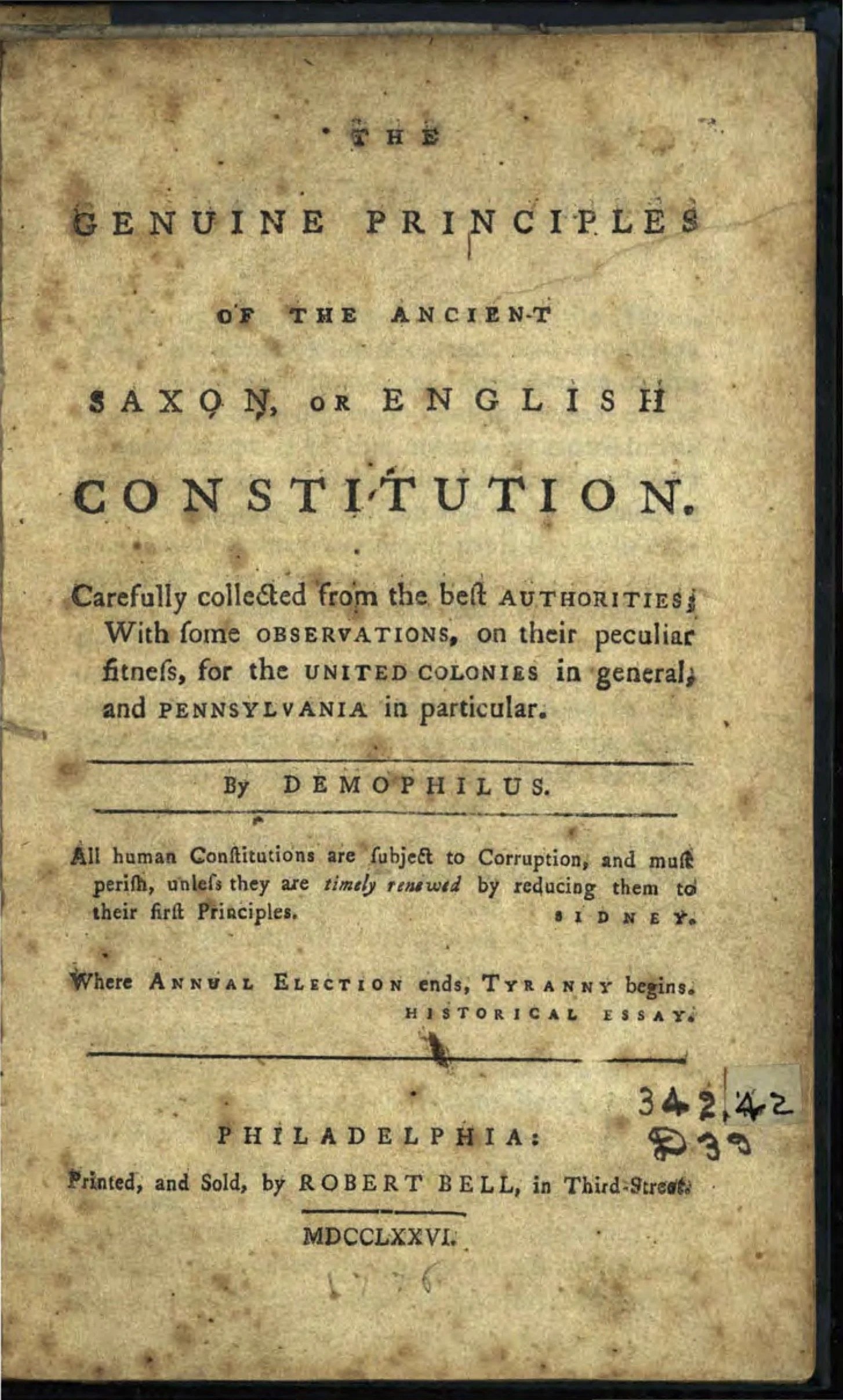
Demophilus, The Genuine Principles of the Ancient Saxon or English Constitution, ca. July 8, 1776, State Library of Ohio
The Genuine Principles of the Ancient Saxon or English Constitution was also the first book publication of the Declaration of Independence. It came off the printing press around July 8, 1776, within days of July 4. “Demophilus” seemingly made a last-minute change to their commentary to conclude with the Declaration. The final paragraph explains that the “events which have given birth to this mighty revolution” could not “be better set forth than in the following Declaration of AMERICAN INDEPENDENCE.”
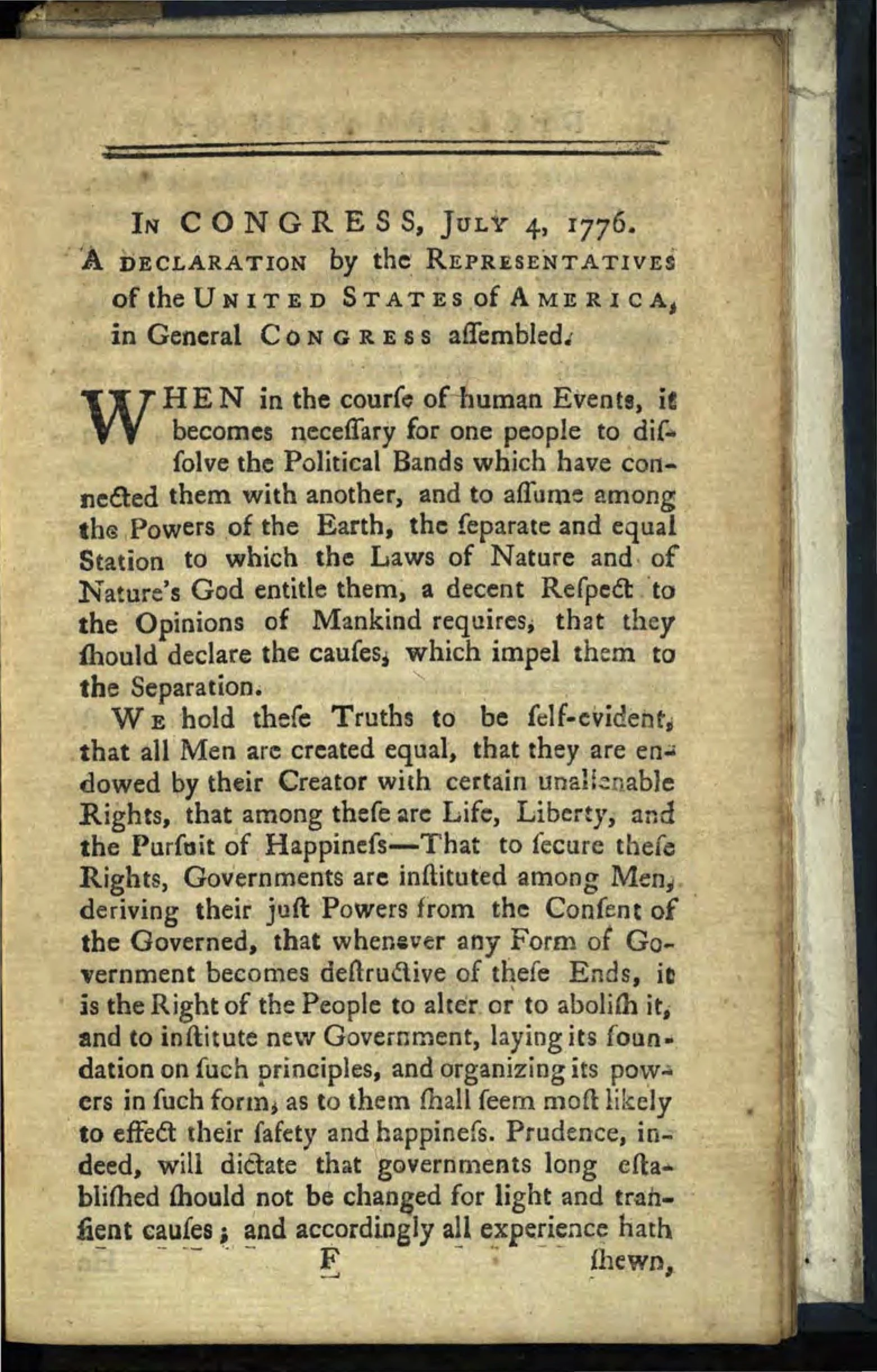
Demophilus, The Genuine Principles of the Ancient Saxon or English Constitution, ca. July 8, 1776, State Library of Ohio
More copies of The Genuine Principles of the Ancient Saxon survive than any other early printing of the Declaration of Independence. This book can be found in dozens of libraries, from the American Antiquarian Society to the Huntington Library to the British Library. Unlike newspapers or broadsides, bound books had staying power. The Genuine Principles publication was not as ephemeral as the other printings of the Declaration spreading around Philadelphia in the summer of 1776.
Where to See It Online: State Library of Ohio