First London, Then Belfast
As the Declaration traveled from Philadelphia to New York to London to Belfast, John Dunlap’s name was left behind
For years, a story has circulated that the Belfast News-Letter was the first newspaper outside of the United States to publish the Declaration of Independence. Some versions claim that bad weather forced a ship bound for London carrying an early copy of the Declaration to seek safety in a Northern Irish harbor, giving the printers in Belfast access to the news before anyone else. Unfortunately, the story is a complete fabrication.
Claims of “firstness” tend to dominate conversations around printings of the Declaration of Independence, obscuring the dynamics of the publication process. It is true that the Declaration appeared in this Northern Irish newspaper in August 1776, but that came after the Declaration had been printed in London, beginning on August 16, and elsewhere in the United Kingdom.
Although it was not the first printing outside of the United States, the Belfast News-Letter printing of the Declaration is still remarkable. It draws a connection between Northern Ireland and John Dunlap, who was born in County Tyrone and immigrated to Philadelphia, where he was the first to print the Declaration. 250 years later, An Post, the Irish postal service, is honoring John Dunlap’s work with a worldwide postage stamp bearing his portrait and his name as it appeared on his printings, including the broadsides of the Declaration of Independence.
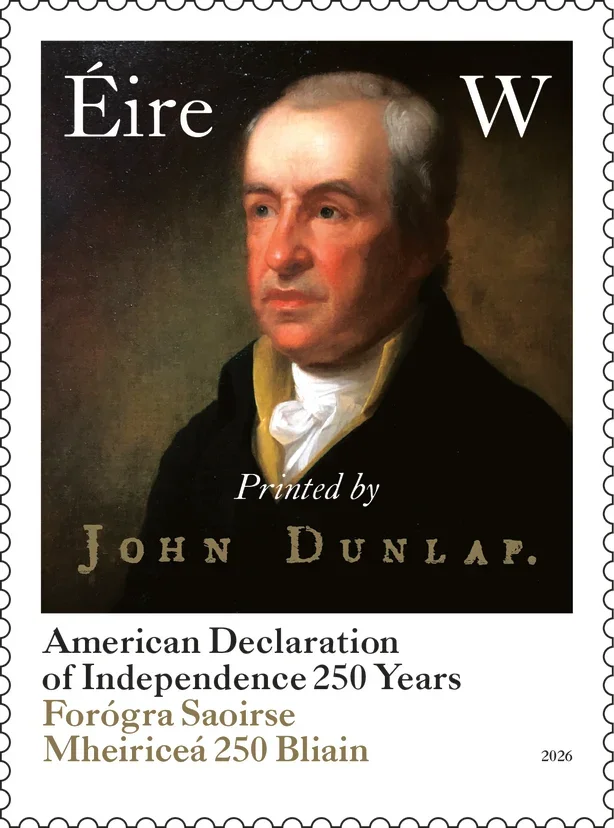
John Dunlap Stamp, An Post
After Dunlap printed the Declaration of Independence in Philadelphia on July 4 and 5, 1776, the text quickly traveled to New York, where multiple copies were packed onto a British mail ship, which quickly crossed the Atlantic. These copies of the Declaration arrived in London in early August, and the first surviving newspaper printings of the Declaration outside of the United States were created there on August 16, barely beating out the Royal Danish American Gazette, printed on the Caribbean island of St. Croix on August 17.
The following week, the Declaration was printed in Irish newspapers in Dublin on August 22, and Kilkenny on August 24, and then Belfast on August 27. The Belfast News-Letter’s masthead can be misleading because it gives the dates “From FRIDAY August 23, to TUESDAY August 27, 1776.” This was typical for newspapers printed two or three times a week, to give readers the span of time covered before the newspaper went to press.
A note which the printers, Henry and Robert Joy, added on the front page just before the Declaration reads “[Remainder of the last PACKETS.]” This suggests that the Declaration had been part of the packet of news from London printed in the previous issue, on August 23. However, whether for lack of room or time to set the type or another reason, the Declaration was reserved for the next issue, on August 27. The Declaration was followed by other news from London, dated August 16, reinforcing the fact that the Belfast News-Letter copied the Declaration from one of the first London newspaper printings on that date.
As the Declaration traveled from Philadelphia to New York to London to Belfast, John Dunlap’s name was left behind. This was not unusual—as new printers created their own versions of the text, they did carry over the information about the printer whose work they had copied. The only names that stuck with the text were John Hancock and Charles Thomson, as president and secretary of the Continental Congress. Thomson, too, was Northern Irish, born in County Londonderry.
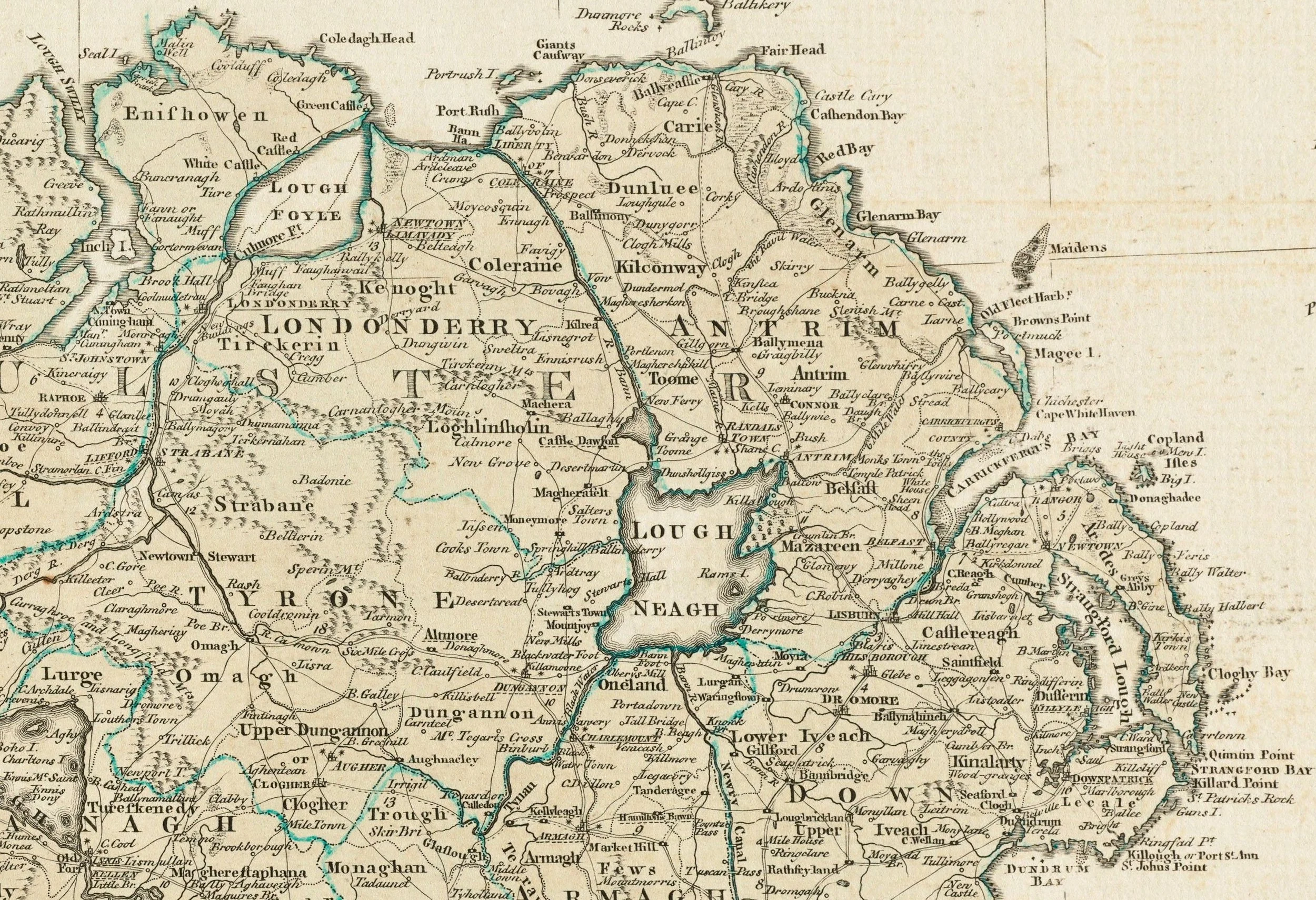
Thomas Kitchin, A New Map of Ireland Divided into Provinces, Counties &c. (Detail), 1777, Norman B. Leventhal Map Center
Where to See It In Person: Linen Hall, Belfast