The Original
On April 13, 1943, the signed parchment copy of the Declaration of Independence was displayed at the Jefferson Memorial.
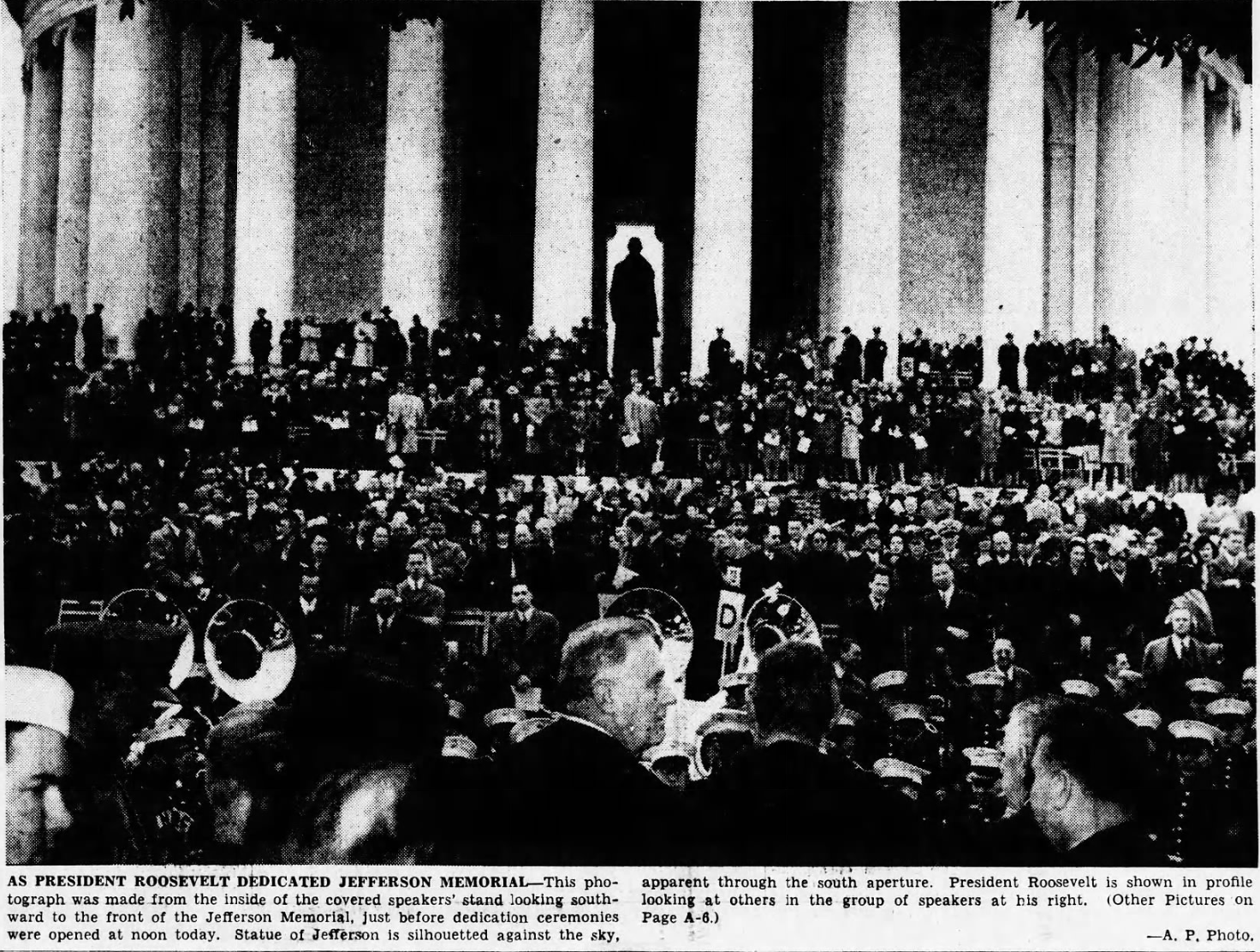
Evening Star, April 13, 1943, p. A-1
It was the bicentennial of Thomas Jefferson’s birth. But it was also dedication day for the monument. Guarded by Marines, the Declaration was placed at the foot of the statue of Jefferson. Thousands of people gathered for the dedication and caught a glimpse of President Franklin D. Roosevelt, who offered remarks.
Roosevelt said that they were dedicating the memorial “in the midst of a great war for freedom”—World War II. The Evening Star reported the scene as Roosevelt departed and the gate was opened: “The crowd thronged up the broad stairway to the portico with its high marble columns and swarmed into the memorial room dominated by the heroic statue of Jefferson. They paused to stare at the statue and to peer inquisitively at the original Declaration of Independence in its bullet-proof case, heavily guarded by marines.” Excerpts from the Declaration were on the walls, as well.
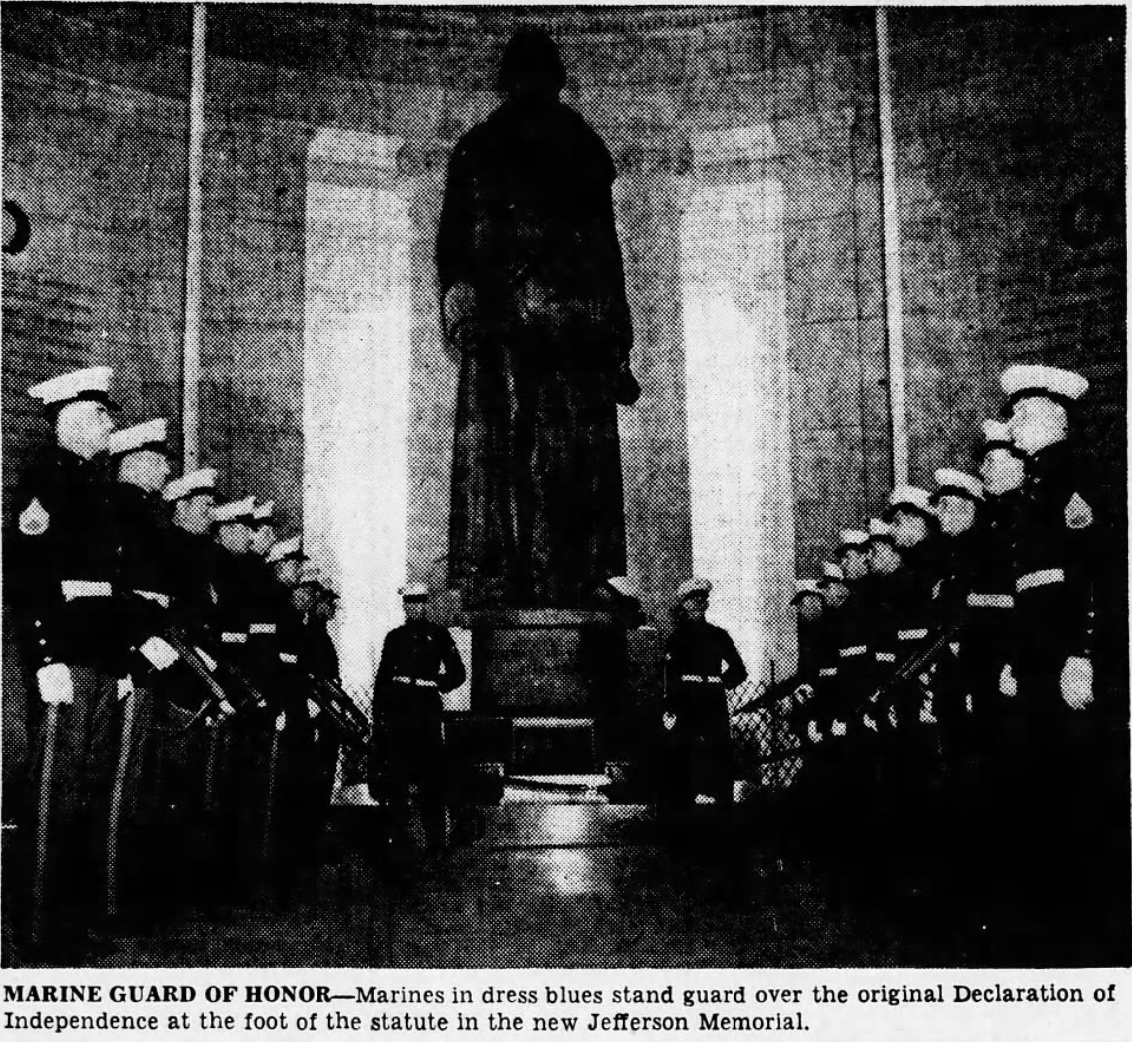
Evening Star, April 13, 1943, p. A-6
The day before, the signed parchment Declaration had been displayed at the Library of Congress. Before the establishment of the National Archives and the Rotunda where visitors can see the parchment today, it was part of the Library of Congress’s collections. But at this particular moment, in the middle of World War II, it did not live at the library. This display was special and momentary.
After the bombing of Pearl Harbor in December 1941, the Library of Congress moved the signed parchment copies of the Declaration of Independence and the United States Constitution and other precious documents to the bullion depository, Fort Knox, in Kentucky. There, they would be protected if Washington, D.C., came under fire.
This temporary display in Washington, D.C. for Thomas Jefferson’s birthday is often treated as a blip in the travels of the signed parchment Declaration. But it actually speaks to the Declaration’s place in American public memory. When people think about the Declaration of Independence, they think about Thomas Jefferson, and they think about the signing. The report in the Evening Star describing the signed copy as “the original”—even though it was created after July 4—gives a sense of the import placed on the parchment. Although it would have been a massive undertaking to bring the parchment from Fort Knox back to Washington, D.C., it was a worthwhile endeavor to the organizers of Jefferson’s 200th birthday festivities.
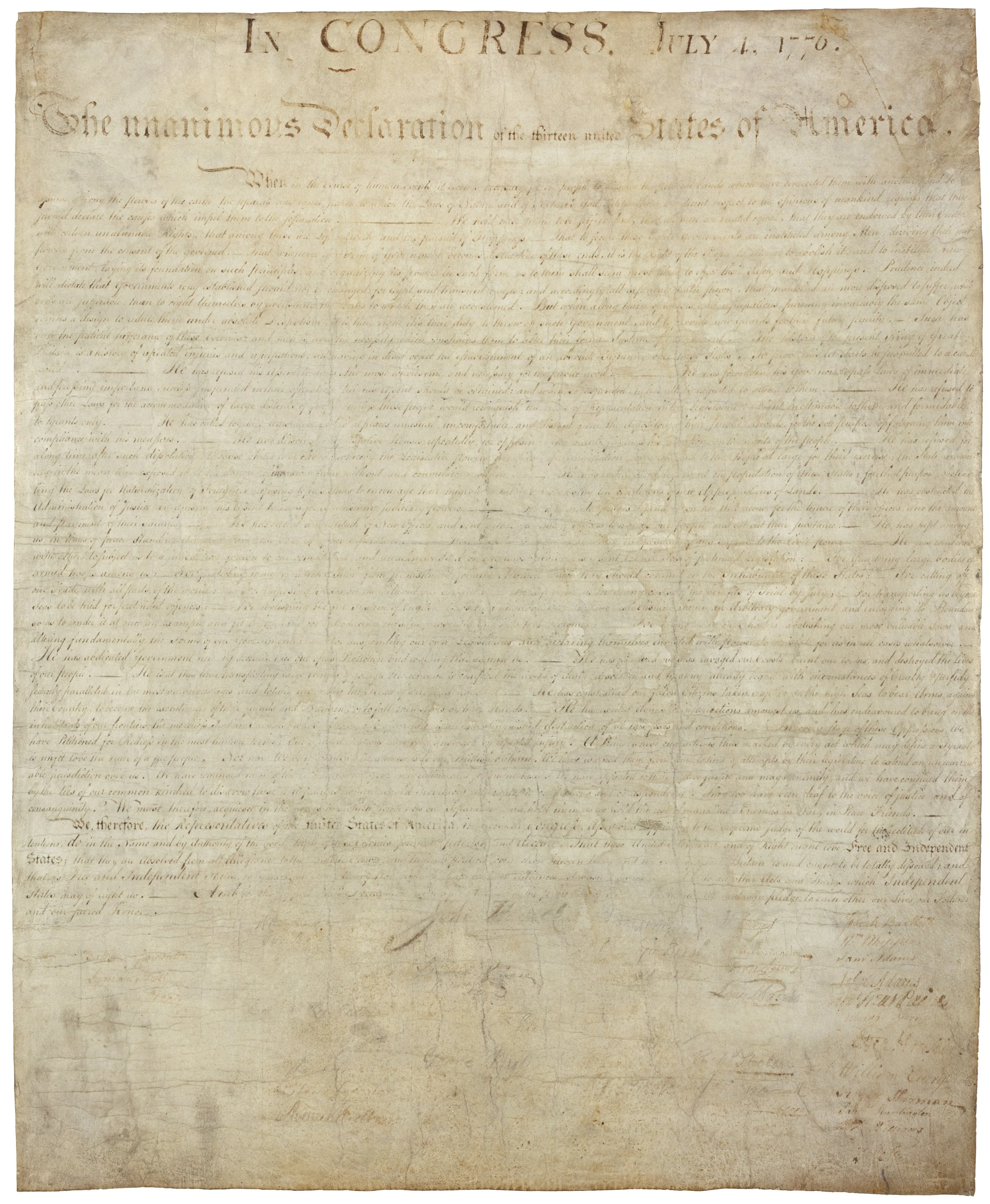
Engrossed parchment copy of the Declaration of Independence, ca. August 2, 1776, National Archives and Records Administration
A closer look at the parchment shows that Thomas Jefferson thought about the significance of the signing, as well. The signatures of the Virginia delegation to the Continental Congress are in the middle column at the bottom of the parchment, below John Hancock’s signature. In order, the names read: George Wythe, Richard Henry Lee, Thomas Jefferson, Benjamin Harrison, Thomas Nelson, Jr., Francis Lightfoot Lee, Carter Braxton. But on August 2, the day the parchment was ready to be signed, George Wythe and Richard Henry Lee were in Virginia. That means that Jefferson was the first of the Virginia delegates to sign the parchment.
Jefferson took great pride as the principal author of the Declaration of Independence. He ensured that it would be the first accomplishment listed on the obelisk marking his grave. But, on August 2, 1776, Jefferson made the decision to leave room above his name for Wythe and Lee to sign when they returned to Philadelphia. In fact, he left so much space that the signatures of Lee’s brother and Carter Braxton are squished toward the bottom edge of the parchment. Jefferson’s decision is not easily noticed just by looking at the signed parchment. Nevertheless, it speaks to Jefferson’s respect for Wythe—his former law professor—and Lee as the elder statesmen of the Virginia delegation.
The crowd that gathered to “peer inquisitively” at the parchment on April 13, 1943, may not have even noticed Jefferson’s signature. After years of being rolled up for storage and displayed in adverse conditions, the parchment is difficult to read. In fact, its stay in the bullion depository during World War II offered opportunities for documentation and conservation that were not possible when the parchment was on view to the public.
Where to See It In Person: National Archives, Washington, D.C.