St. Petersburg
In Russia, independence was not part of the story
The St. Petersburgische Zeitung was, as the name suggests, a German newspaper printed in the capital of the Russian Empire. One of the men responsible for translating and printing the Declaration of Independence in Philadelphia, Charles Cist, was born into the German community in St. Petersburg—though Cist was not his surname when he lived in Russia. As the story goes, he became a revolutionary and was exiled to Siberia. He escaped and eventually landed in Philadelphia with the surname “Cist” crafted from the initials of his former full name.
The Declaration of Independence was translated, excerpted, or at least noted in German newspapers in Philadelphia and across Europe. The German newspaper in St. Petersburg was printed on Mondays and Fridays in 1776, and the entire year’s run is digitized. It should be easy to find the news of independence within these pages. But the Declaration was not printed in the St. Petersburgische Zeitung. This absence shows the limits of the Declaration’s reach as a news item.
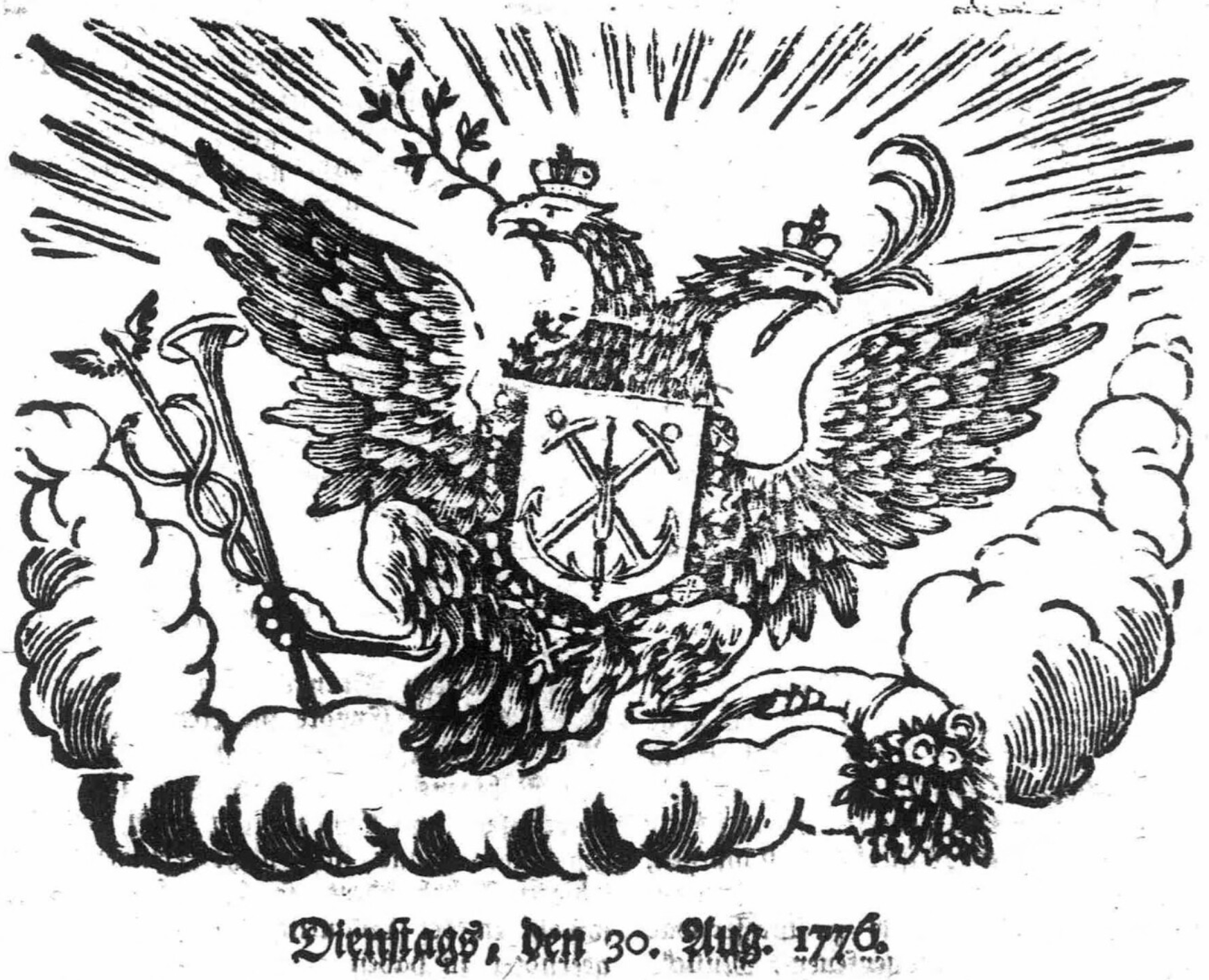
Detail of St. Petersburgische Zeitung, August 30, 1776, DiFMOE
On August 30, 1776, extracts of letters from General William Howe, one of the King’s Commissioners for Restoring Peace, were printed in the St. Petersburgische Zeitung, copied from a London newspaper dated August 13. But the translation was incomplete. Two paragraphs of Howe’s letter were left out, including a critical passage reading: “I am informed that the Continental Congress have declared the United Colonies free and independent States.”
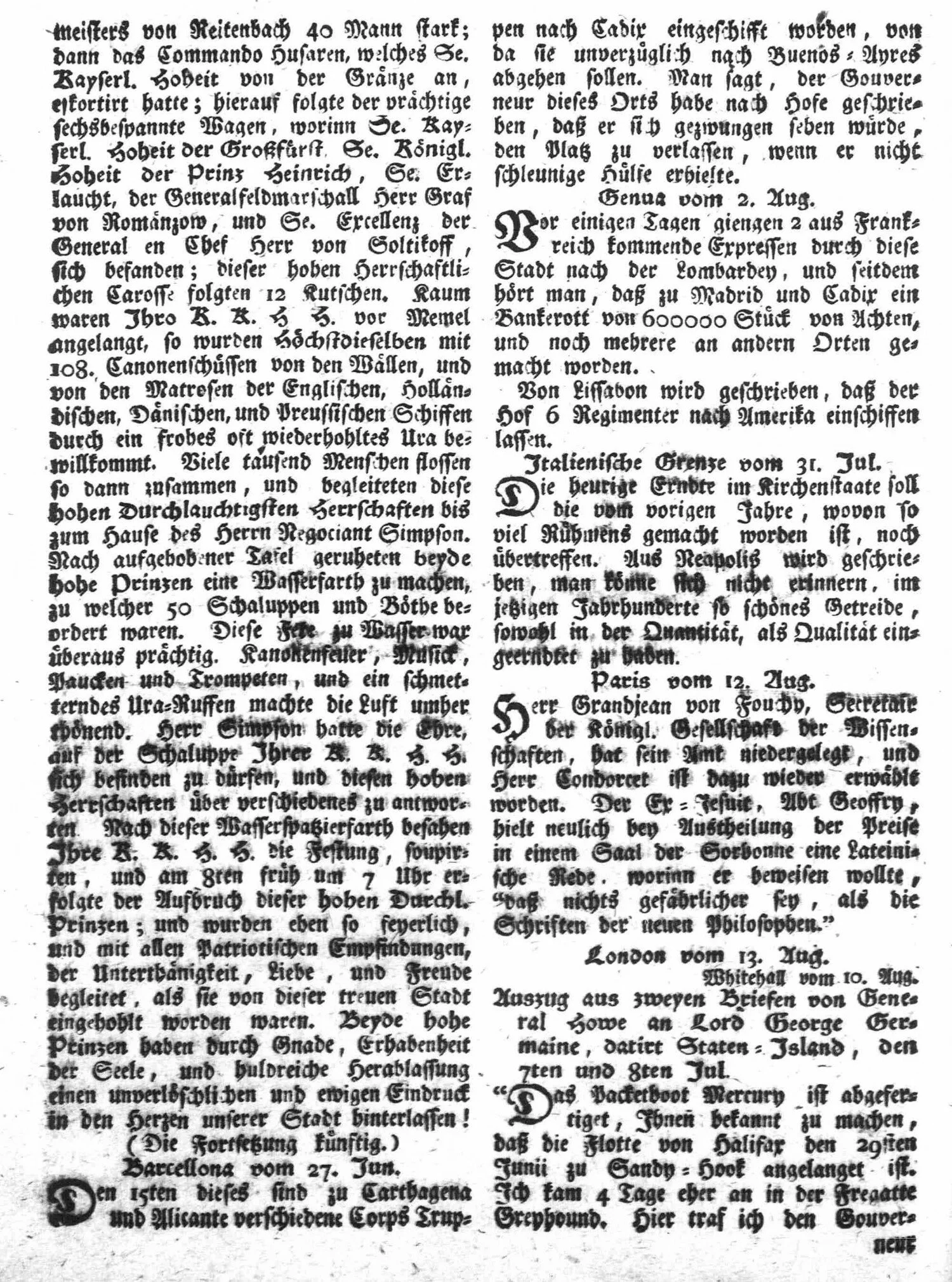
St. Petersburgische Zeitung, August 30, 1776, DiFMOE
The Declaration of Independence spread to European newspapers through London newspapers dated August 16, 1776. If the Declaration were in this German-Russian newspaper, it would be under that heading. The first pieces of news with the heading “London vom 16. Aug.” were in the September 2 issue. These paragraphs included reports about British officers, not the Continental Congress.
The next issue, on September 6, had news from London dated August 20. There was nothing about the Declaration of Independence. On September 9, there was news dated August 23, beginning with a story that had originated in London: that the Continental Congress had created a new military order, the Order of Independence. Here, John Hancock got a mention—not as signer of the Declaration of Independence or president of the Continental Congress, but rather, as president of the Order of Independence. The order was rounded out by 24 knights, including General George Washington.
In the following paragraph, the Declaration of Independence was finally mentioned. This was less news and more opinion from the London press, translated into German. The “kühne Schritt,” or bold step, that the colonists had taken in declaring independence had turned Britons against them, especially because, “in ihrer Declaration den König selbst beschuldigen, da sie doch vorhero nur die Ministers ihre Vorwürfe empfinden ließen”—in their Declaration, they blame the king, rather than his ministers. It is interesting that the publishers of the St. Petersburgische Zeitung used the English word “Declaration” here, rather than the German word “Erklärung,” used by other printers, including those in Philadelphia. It is also important to note that the word independence was not used at all in this paragraph.
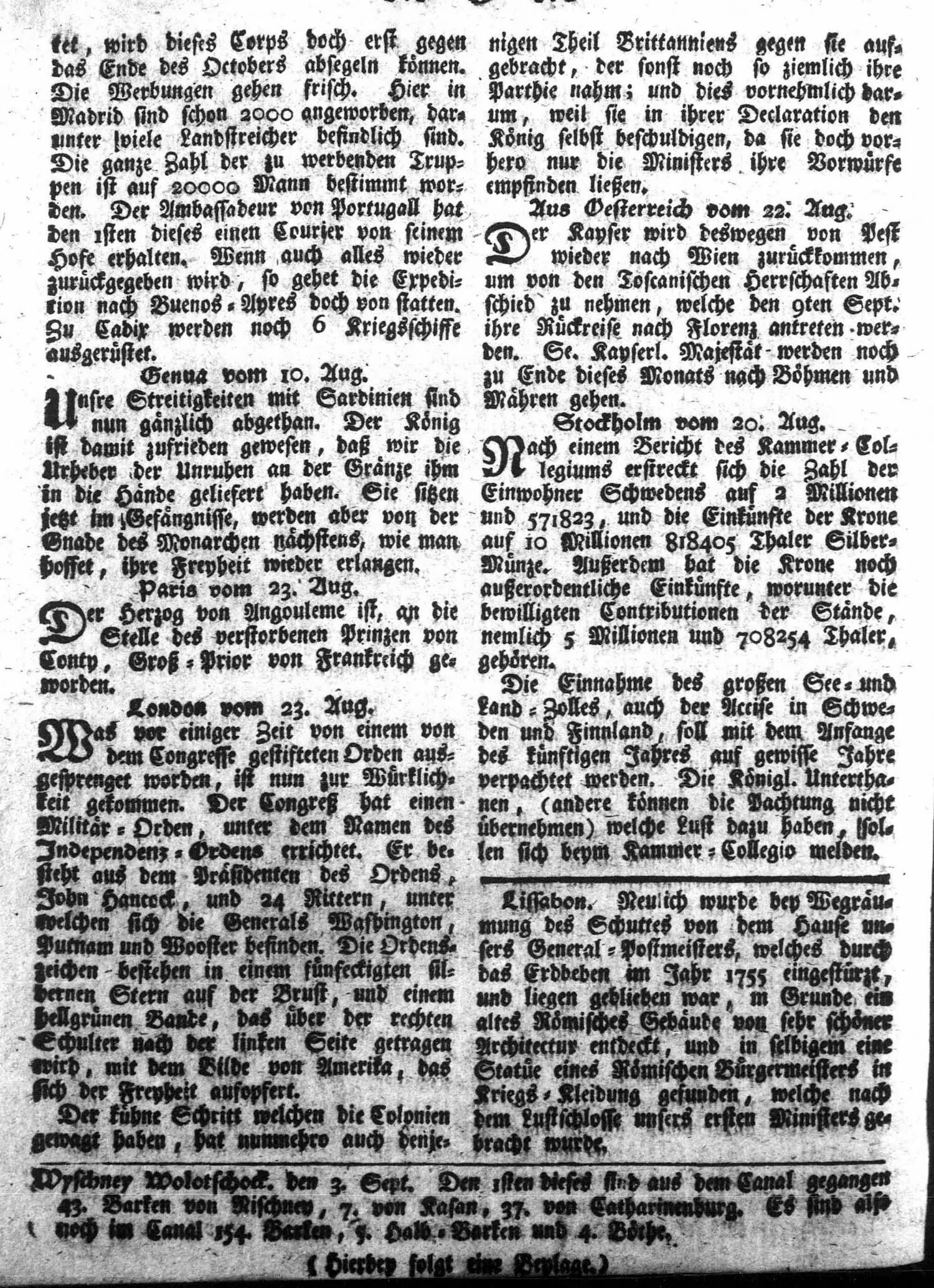
St. Petersburgische Zeitung, September 9, 1776, DiFMOE
In Russia, independence was not part of the story. It seems as though the publishers went out of their way to avoid mentioning the word, except in the fabricated story describing the knights of the Order of Independence. As Charles Cist had learned firsthand, revolutionary ideas—including the notion of declaring independence from an empire—were verboten in St. Petersburg.