Hoofdzakelyk
For Johannes Enschedé, the main part of the Declaration did not include the grievances
The grievances have been the least known part of the Declaration of Independence from the very beginning. The opening sentences about rights and tyranny have captured attention across the generations, while the final sentences clearly articulated the independence of the United States. But the list of complaints about King George III is lengthy and dense enough to cause readers to skip over it. In the case of one Dutch newspaper in 1776, readers demanded to see the grievances.
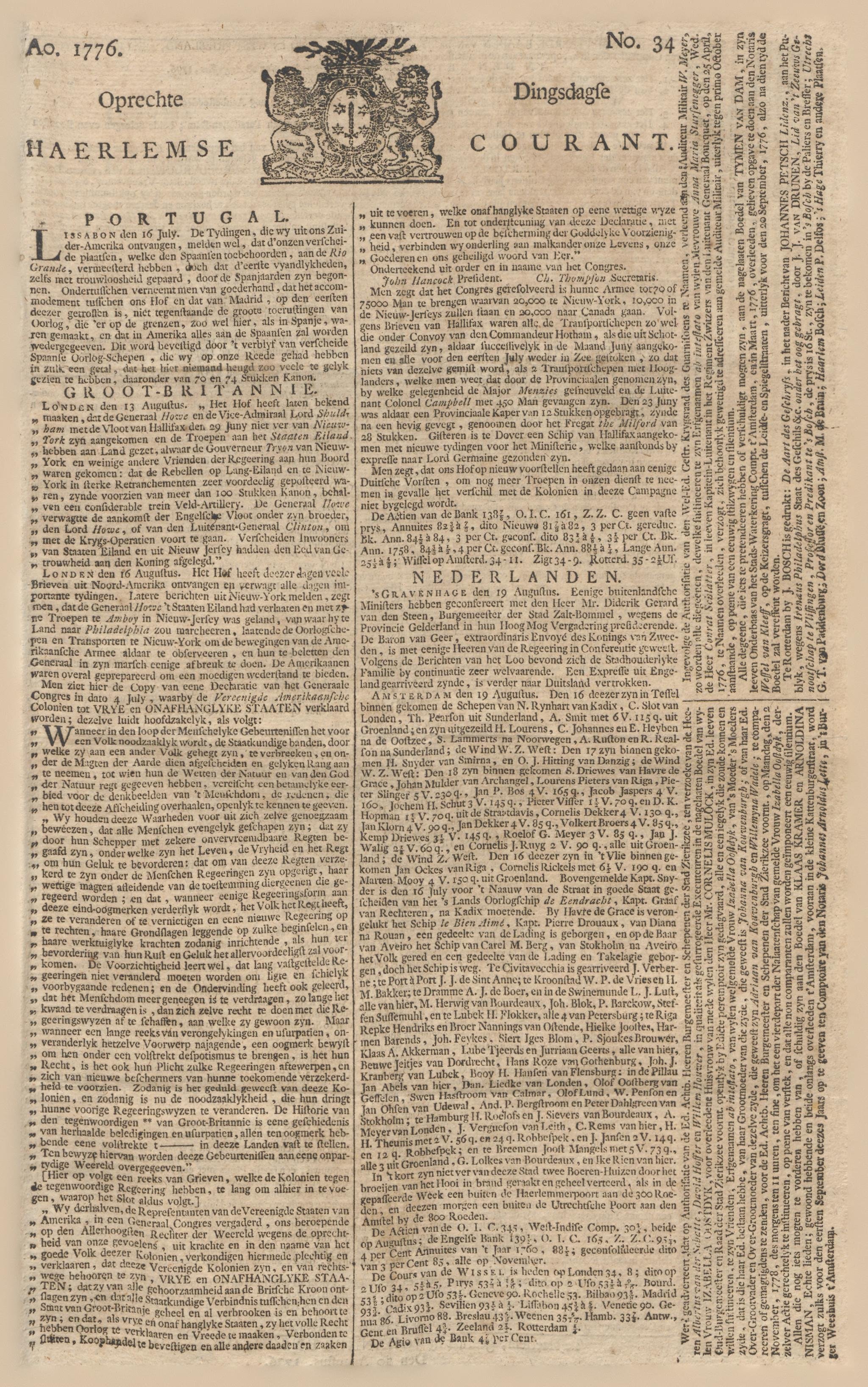
Haerlemse Courant, August 20, 1776, p. 1, Delpher
In the Dutch Republic, Johannes Enschedé printed the Declaration of Independence in the Oprechte Haerlemse Courant on August 20, 1776. The newspaper had been in print for more than a century and, by 1776, Enschedé was publishing new issues three times a week, on Tuesdays, Thursdays, and Saturdays in Haarlem. In this Tuesday issue, he explained that the united American colonies had declared themselves “VRYE en ONAFHANGLYKE STAATEN,” or free and independent states. Enschedé prefaced the Declaration by saying “dezelve luidt hoofdzakelyk, als volgt.” The key word in that phrase is “hoofdzakelyk,” or hoofdzakelijk, meaning mainly. The Declaration read mainly as followed.
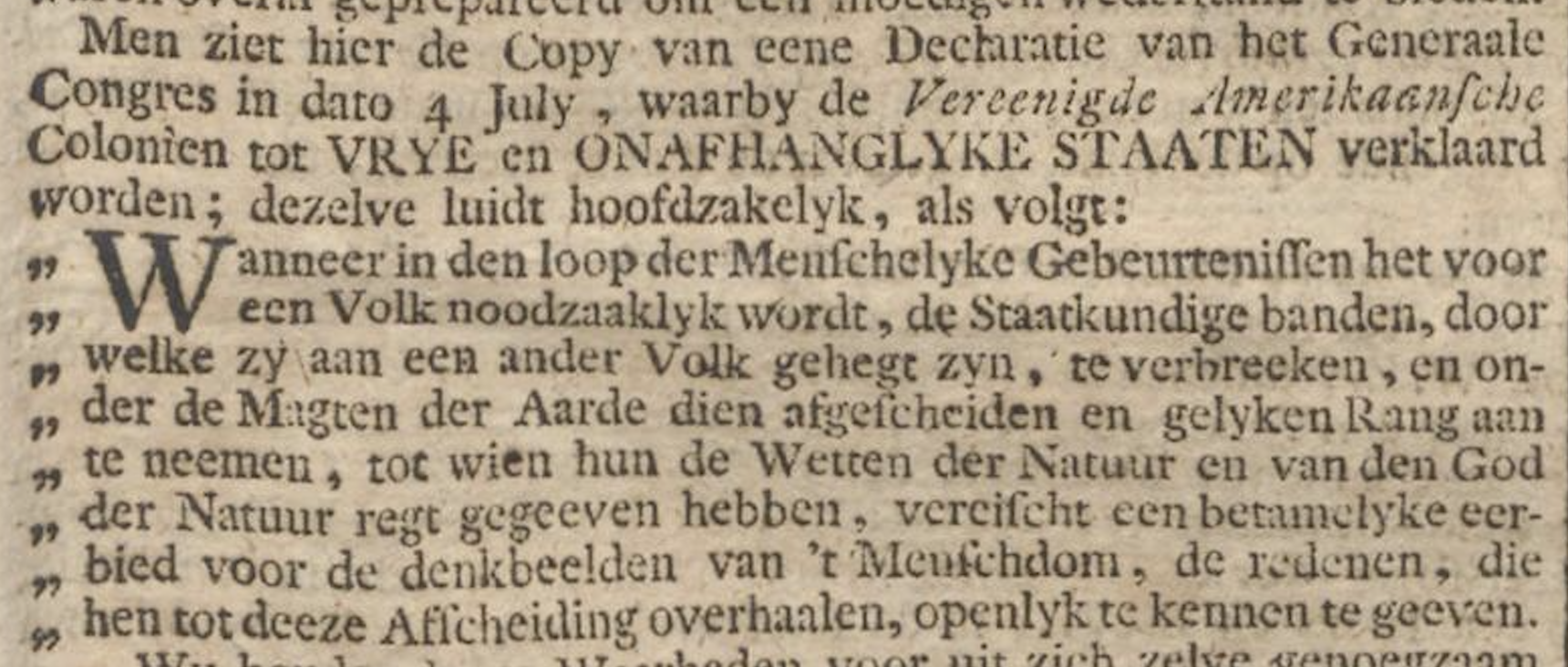
Haerlemse Courant, August 20, 1776, p. 1, Delpher
For Johannes Enschedé, the main part of the Declaration did not include the grievances. In their place, he inserted a bracketed note to his readers:
Essentially, the grievances were too long to include, so the Haerlemse Courant skipped over them and proceeded to the conclusion.
However, the grievances appeared in the next issue of the Haerlemse Courant, on Thursday, August 22, taking up an entire column of the newspaper. What happened? At the top of the column, Enschedé included an asterism, or three stars, to catch his readers’ attention, and included the following note in italics:
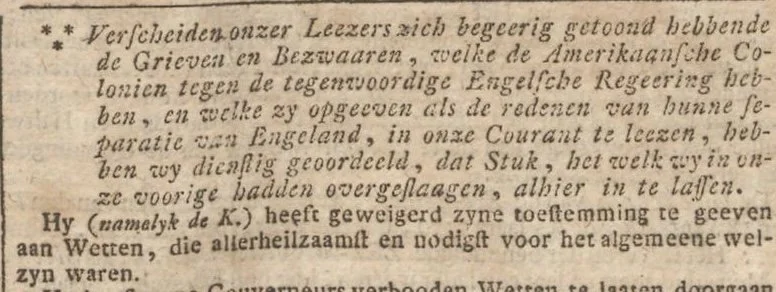
Haerlemse Courant, August 22, 1776, p. 1, Delpher
Evidently, several of the Haerlemse Courant’s subscribers had expressed interest in reading the American colonists’ grievances and complaints about life under British rule. Enschedé therefore decided to print the list which had been excluded from the previous issue. However, because the grievances appeared without context, readers might have been confused about the pronoun “Hy,” or he. A parenthetical note in italics explained that “Hy” meant the “K.,” which readers would have had to guess was the king. This bit of censorship was probably carried over from the British newspaper that Enschedé’s printing office had relied on to translate the Declaration into Dutch.
The August 20 issue of the Haerlemse Courant was far from the only European newspaper to skip over or summarize the grievances. But Johannes Enschedé’s decision to print the grievances in the following issue, after describing them as too long to include, is striking. It shows that he and his workers had received complaints from readers who wanted to have more information about the Continental Congress’s decision to declare independence. Whether these readers supported the American cause or questioned their separation from Great Britain is unclear.