Long Suspected
On a ship in New York Harbor, a British clerk copied the Declaration of Independence by hand. British Vice Admiral Molyneux Shuldham enclosed this manuscript in a letter to John Montagu, 4th Earl of Sandwich and First Lord of the Admiralty.
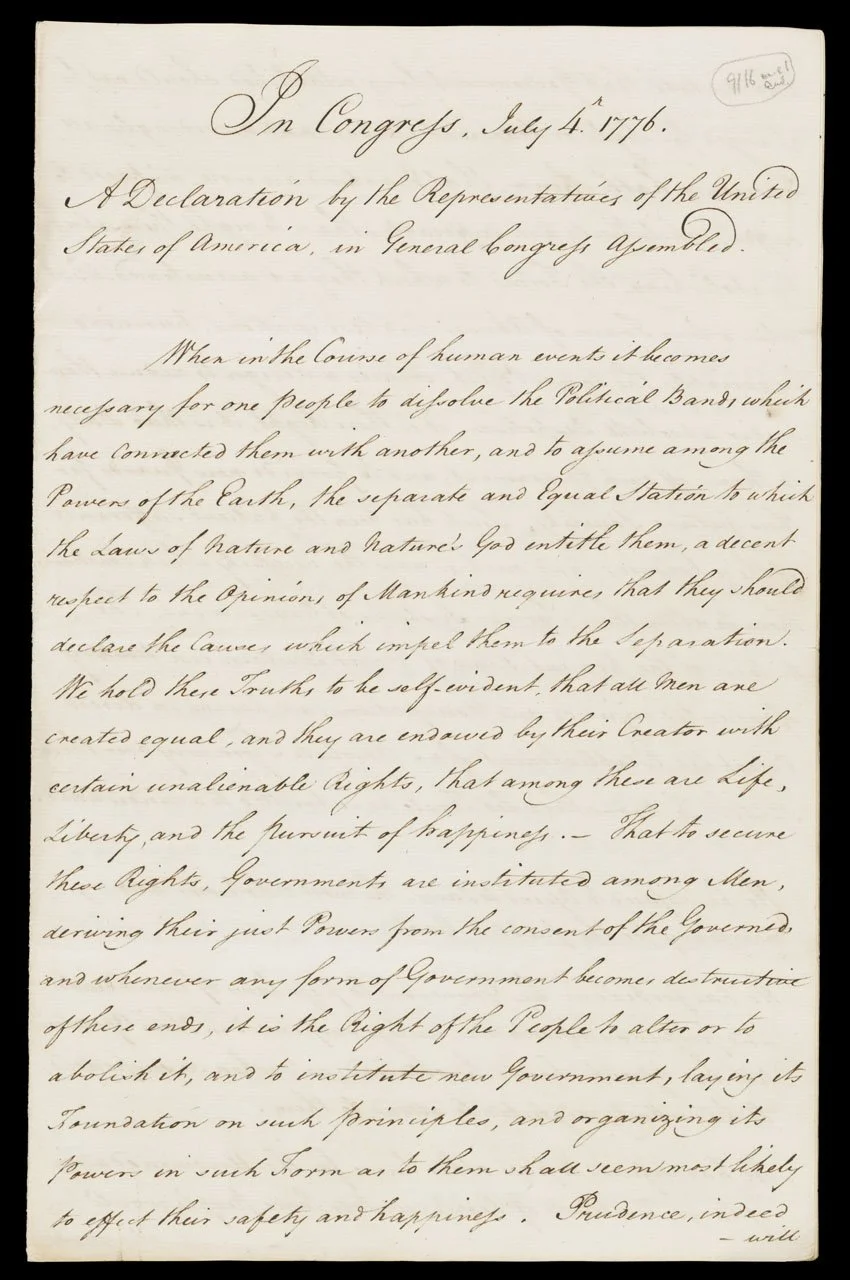
Declaration of Independence, ca. July 10, 1776, National Maritime Museum, Greenwich, London
Shuldham’s letter, dated July 10, said that he was sending “a Copy of the late Declaration of the Continental Congress, one Printed Copy of which arriv’d here last night.” That was July 9, the same night that the gilded equestrian statue of King George III in Manhattan was toppled.
Shuldham described the Declaration of Independence as “perhaps the first authentic confirmation of what has been so long suspected, the Establishment of Independence in America.” This idea—that the colonists had wanted independence all along—was pervasive, when in reality, many colonists had embraced the necessity of independence shortly before the Declaration. Previously, the fight had been largely for reconciliation with increased rights and representation, not a total separation from Great Britain.
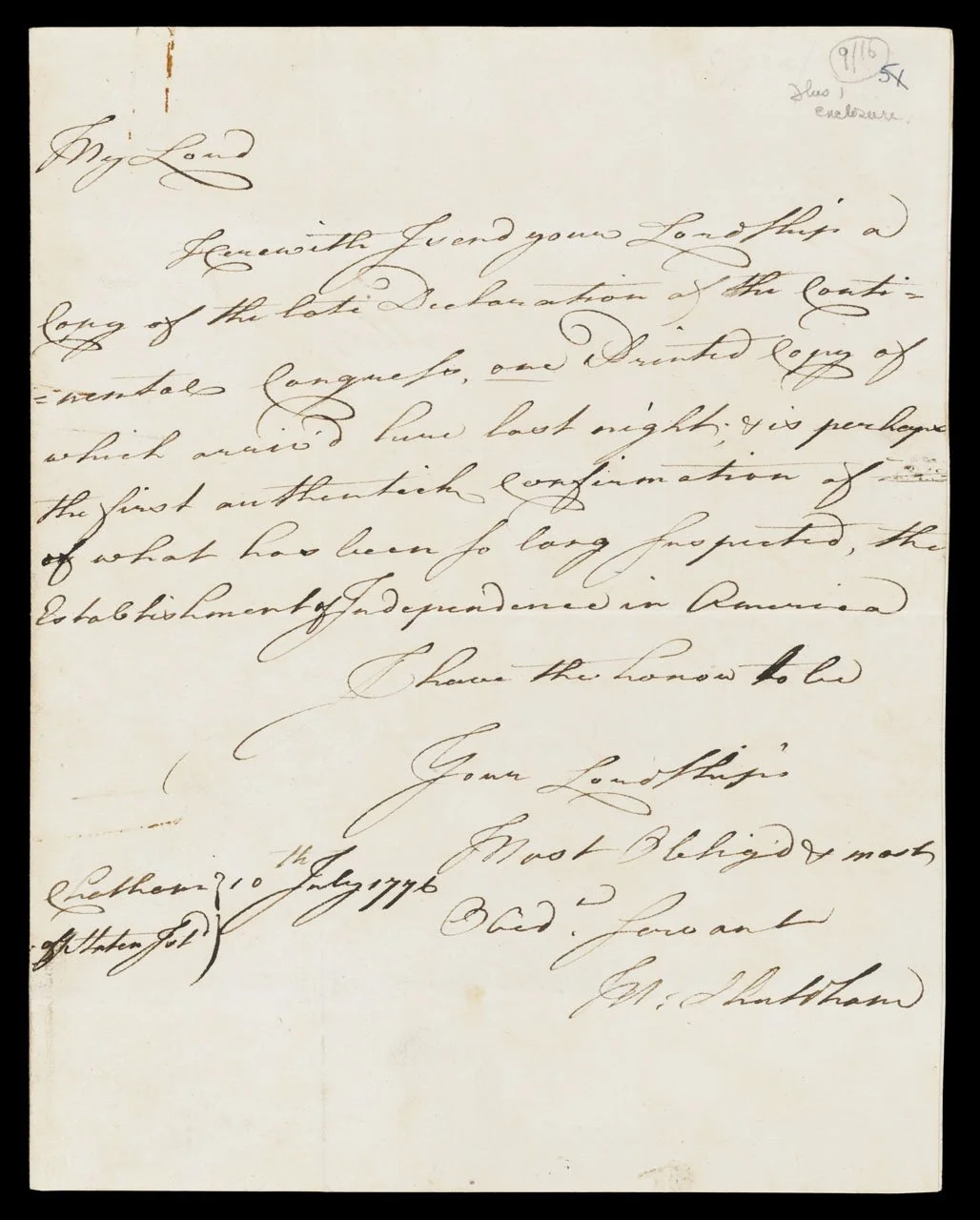
Letter from Vice Admiral Molyneux Shuldham to the Earl of Sandwich, July 10, 1776, National Maritime Museum, Greenwich, London
Sometimes, biased Britons put their voices in the mouths of well-known Americans. An article in the London Morning Post on July 1, 1776—before the Declaration of Independence—falsely claimed that the Continental Congress had broken up after a “violent commotion… on account of a judicious remonstrance from General Washington, who with a proper spirit, tho’ at the same time with great temper, informed them ‘if their aim was total independency, he had much mistaken them, and therefore, must beg leave to resign the chief command of their forces, which he always thought were embodied for different purposes, and which he headed, not with a view of separating the two countries for ever, but to effect if possible, a more lasting union between them.”
One popular analogy was that the leading political figures in the colonies had taken off their mask and revealed their true intent: independence. Ambrose Serle, secretary to British Vice Admiral Richard Howe, sailed into New York Harbor on July 12 and found out about the Declaration from Vice Admiral Shuldham, who came aboard Howe’s ship. He wrote in his journal that “the Congress have at length thought it convenient to throw off the Mask.” He explained: “Their Declaration of the 4th. of July, while it avows their Right to Independence, is founded upon such Reasons only, as prove that Independence to have been their Object from the Beginning.” Serle described the Declaration as an “impudent, false and atrocious Proclamation.”
Another article in the London Morning Post on October 8 indicated that King George III had “received constant assurances from all the Ambassadors and foreign Ministers at the Court of Great Britain, that since the malecontents of America have thrown off the mask, and declared for independence, the potentates whom they represent, hold their conduct in the highest degree of detestation,” and refused to ally with the rebellious colonists.
British barrister John Lind addressed each of the grievances about the king in his Answer to the Declaration of the American Congress. He reacted to the line in the Declaration, “In every stage of these oppressions we have petitioned for redress in the most humble terms; our repeated petitions have been answered only by repeated injury,” by referring back to the rights claims in the Congress’s previous petitions. “Is this the language of subjects humbly petitioning for redress?” Lind asked. “Of men, who profess their selves members of one large empire, and subordinate in any degree, to the supreme controlling body of that empire? or is it the language of one independent state to another?” Lind insisted that, “Had an Angel descended from Heaven with terms of accommodation, which offered less than independence, they would have driven him back with hostile scorn.”
Vice Admiral Shuldham’s response to the Declaration of Independence and the copy of the text handwritten by one of his clerks ended up in Lord Sandwich’s papers in the National Maritime Museum in Greenwich, England. This particular copy is a reminder that the Declaration quickly became cargo for British ships and ammunition for British commentators.
Where to See It Online: National Maritime Museum, Greenwich London