January 17, 1776
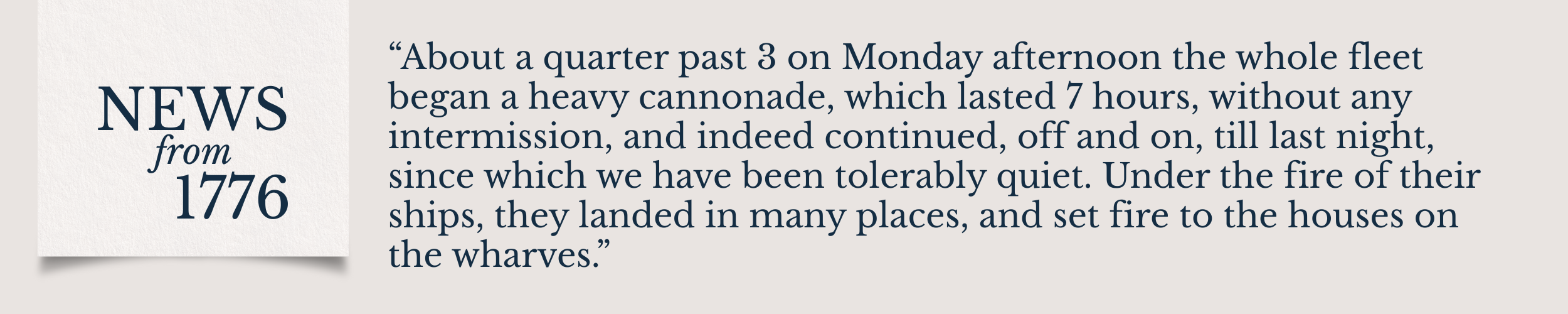
On January 1, 1776, Norfolk, Virginia, was in flames. This account written a few days later described the “heavy cannonade” by British ships, which “set fire to the houses on the wharves.” It began at 3:15 pm on New Year’s Day and continued “off and on” through the night of January 3. This writer claimed that “nine tenths of the town are destroyed,” and only a few people had been wounded or died, thanks to the intervention of “Providence.”
This was only one of the reports of the burning of Norfolk first printed in the newspapers in Williamsburg, Virginia, and then reprinted throughout the colonies. The Pennsylvania Gazette included extracts of several letters, all of which focused on the bravery of the Americans in Norfolk and the destruction caused by the British ships. These reports claimed that strong winds had helped the fire from the British bombardment send. However, this was a media strategy that obscured the Americans’ role in destroying and looting the town, ultimately causing more damage than the British forces. The Virginia Committee of Safety subsequently approved the destruction of the structures that survived the fire.

The Pennsylvania Gazette
Printed by Hall and Sellers
Norfolk, January 4, 1776, 3 o’clock P.M.
“About a quarter past 3 on Monday afternoon the whole fleet began a heavy cannonade, which lasted 7 hours, without any intermission, and indeed continued, off and on, till last night, since which we have been tolerably quiet. Under the fire of their ships, they landed in many places, and set fire to the houses on the wharves. In these attempts, many of them, we are certain, were killed, and never failed being repulsed by our people. We had not a man killed, and only 5 or 6 wounded, one supposed mortally; and two or three women and children are said to be killed. Providence certainly interfered in our favour, or more lives must have been lost. They once landed and got into the streets with field pieces, but were beat back with loss, and no execution done by their fire. Nine tenths of the town are destroyed, but the fire is now out.”